
On travel, faith, death, and the courage to understand what we’ve been taught to fear.
I found myself in an unexpected confrontation this week.
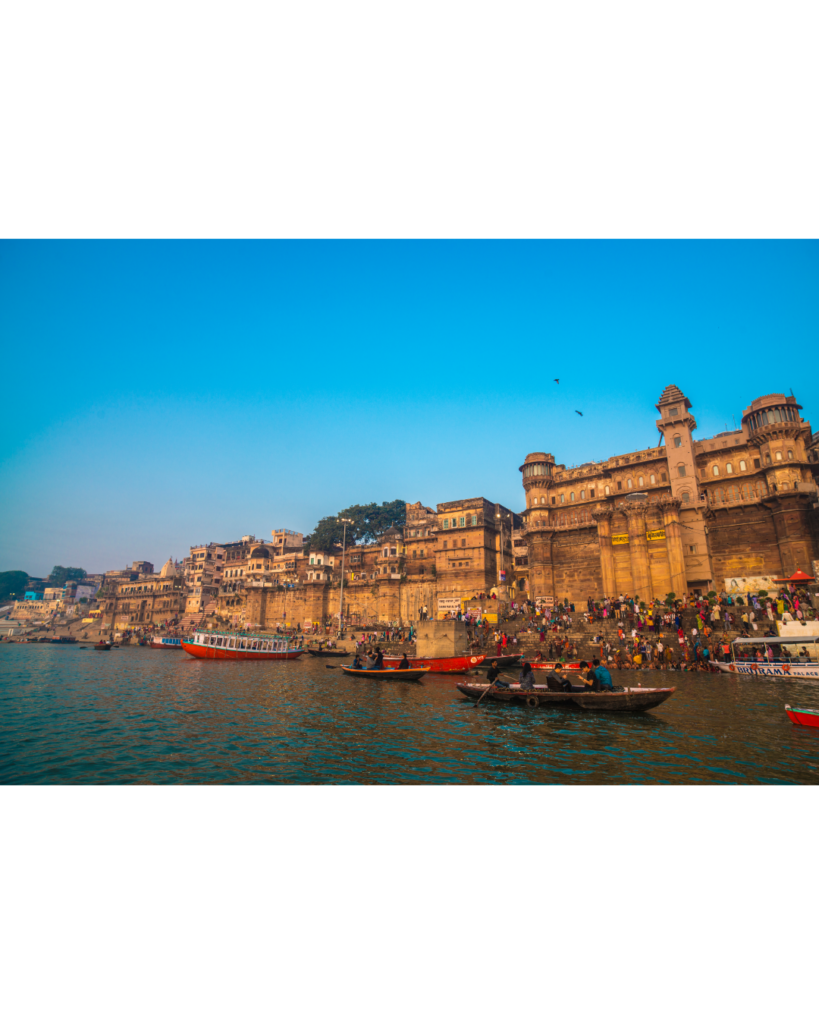
I was calmly explaining my recent journey around India when a man suddenly fixated on Varanasi. According to him, it was satanic, filthy, dark, and full of floating corpses. He spoke with absolute certainty.
I listened quietly, stunned.
I had been there.
He had not.
The conversation was escalating until something clicked: this same man believes Catholics are Satanists. In that moment, I understood there was no curiosity there, only fear, projection, and inherited prejudice. I disengaged.
But the hypocrisy stayed with me.
Paganism We Accept, Sacredness We Reject
Christians routinely holiday at former pagan sites across Europe without hesitation. People pose smiling selfies at the Colosseum, a place soaked in blood, ritual violence, and offerings to Roman gods. Paganism still hides in plain sight: the planets we name effortlessly, Mars, Venus, Jupiter, Saturn, are Roman and Greek deities. We use these names daily. Some even give them to their children.
Yet respectfully observing a holy city from another religion suddenly makes me less holy?
Africans in particular have been conditioned to fear African and Indian traditional religions, branded demonic through colonial Christianity, while enthusiastically celebrating Halloween, a festival rooted in pagan Celtic rituals, spirits, masquerade, and death symbolism. The contradiction is loud, yet rarely interrogated.
Meanwhile, increasing numbers of Europeans journey to Varanasi to immerse themselves in the Ganges River, seeking healing, liberation, and spiritual meaning.
Travel, I’ve learned, reveals far more about us than about the places we visit.
Arriving With Questions, Not Conclusions
Nothing in India shocked me.
I grew up on Indian films. I formed deep friendships with Indians long before I ever set foot in the country. I arrived not to gawk or judge, but to learn.
Varanasi is believed to derive its name from two rivers or streams that flank the city before meeting the Ganges: Varuna and Assi: Varuna + Assi = Varanasi. It is one of the oldest continuously inhabited cities in the world and among the most sacred in Hinduism.
The Ganges is the holiest river for Hindus. In June, I stood at the Jordan River, where my own Saviour was baptised. I have been at the Nile River, and I look forward to standing beside the Tigris River and Euphrates River. Sacred waters fascinate me, not because they are magical, but because humanity consistently encounters God, meaning, and memory at the edge of water.
Death, Dignity, and the Courage to Look
I witnessed cremations at a ghat.
As a child, my first exposure to cremation came through Indian films: Mard or Teri Meherbaniyan. It filled me with deep sadness; I believed the dead could feel pain. Now, with understanding, that sadness has transformed into reflection.
Learning about Hindu cremation rites, the white cloth, the orange cloth, the male family member who lights the fire, confronted me with the impermanence of life. It stirred humility. It demanded honesty about how briefly we exist.
In biology class, we learned the characteristics of living organisms using the acronym MR NIGER:
Movement, Respiration, Nutrition, Irritability, Growth, Excretion, Reproduction.
Some argued for adding D: Death.
Yet culturally, we are taught to fear death, silence it, and pretend it belongs only to old age.
Watching a ghat that performs cremations 24/7, while prayers rise, weddings take place, children laugh, and daily life continues, moved something deep within me. Last year, I lost three friends. Young people. It reminded me that death is not selective, and tomorrow is never guaranteed.
I left with a renewed urgency to live truthfully, impactfully, and without fear.
Selective Outrage and Forgotten Histories
I did not seek extremes. I stayed within what was allowed and decent. I wasn’t chasing shock or virality. I was learning.
Yes, certain groups: pregnant women, children, and those with particular conditions, are committed to the river rather than cremated. And yet, what river on earth does not carry the dead?
Do we realize how many of my ancestors drowned in oceans and rivers during the transatlantic slave trade, sold by those who later brought Christianity to Africa?
Selective outrage is convenient.
Historical amnesia is comfortable.
Truth is not.
Reverence Beyond Labels
I attended the evening aarti ceremony. It was a very spiritually moving experience, reverent, beautiful, intentional, deeply ordered.
Globally, cremation is increasing, often due to cost. At Mumbai airport, in an endless immigration queue, I met a man from the UK. Ten years earlier, he had scattered his father’s ashes in the Ganges. He returns every few years.
Not because he is Hindu, but because meaning transcends labels.
Open-mindedness is one of the greatest assets a traveller and a believer can possess.
Respect does not weaken faith.
Understanding does not dilute conviction.
Encountering the sacred in others does not erase the sacred in us.
If anything, it deepens it.