
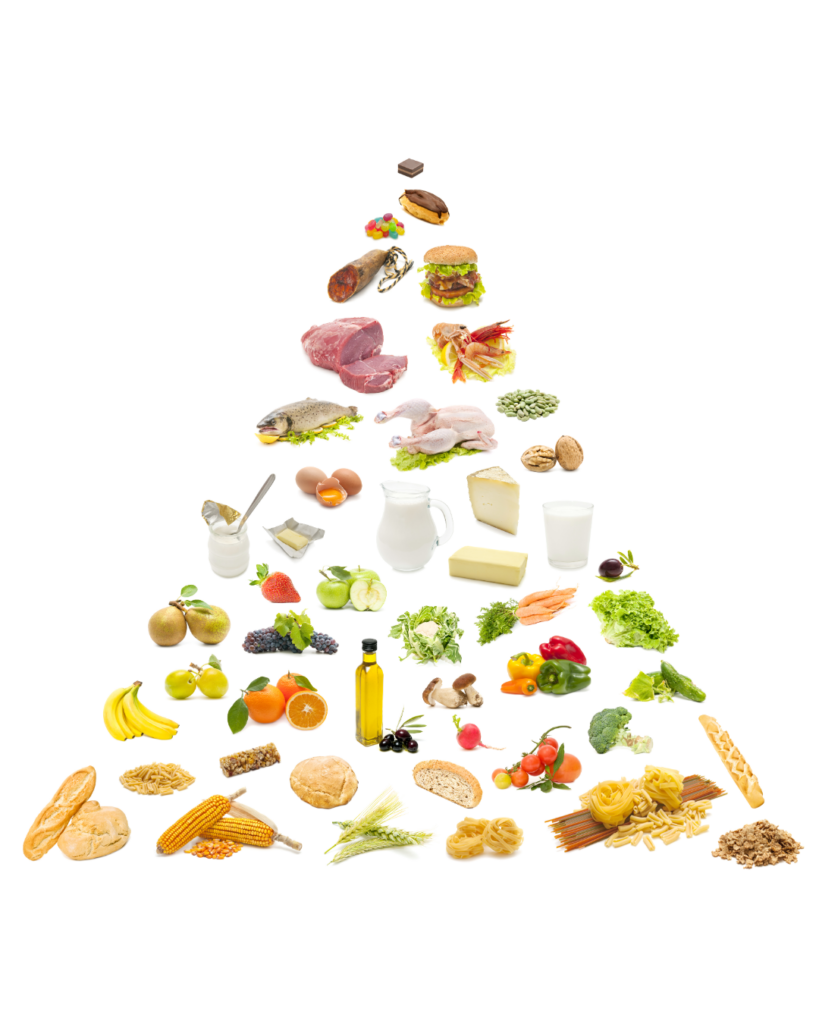

There is a worldwide puzzle around food today. People are stressed, overwhelmed, and uncertain about what they should be eating for good health. Nutrition advice feels contradictory, political, commercial, and sometimes elitist.
Organic versus GMO.
Free-range chicken versus caged.
Grass-fed livestock versus grain-fed.
Whole foods versus fortified foods.
Between all these choices lies a significant price gap, forcing people to question not only what to eat, but also who to trust, scientists, governments, food corporations, or ancestral wisdom.
As a nutritional therapist, a chef, and a world traveller, I believe this confusion exists because the way humans eat has changed far more rapidly than human biology ever could.
For this reflection, I am walking down my food memory lane, cross-referencing lived experience with foods described in the Bible, one of the oldest and most continuous records of human food systems, agriculture, fasting, feasting, and communal eating.
Not as a restrictive diet.
Not as religious instruction.
But as historical evidence of how humans once related to food.
Biblical Food as Historical Record, Not a Diet Trend
Long before nutrition labels and marketing claims, biblical food references consistently centre around:
- Whole grains (wheat, barley)
- Legumes (lentils, beans)
- Fruits (figs, dates, grapes, olives)
- Honey as a sweetener
- Fish
- Meat eaten sparingly and communally
- Oil, primarily olive oil, as a fat source
What is striking is not what is included, but what is missing:
- No refined sugars
- No sweetened beverages
- No ultra-processed convenience foods
Food was seasonal, labour-intensive, shared, and deeply connected to land and rhythm. Not perfect, but grounded.
Born in Nigeria, 1986: Town vs Village Eating
I was born in Nigeria in 1986. My parents lived in Enugu, making us township people, while my grandparents lived in the village.
Even then, there were clear differences in how people ate.
In the village, meals were built around what was grown, harvested, dried, fermented, or freshly cooked. In town, food had already begun shifting toward convenience, largely because both parents worked outside the home.
Electricity was stable then, so town families could cook soups and stews in bulk and freeze them. Village families cooked more frequently, sometimes stretching soups for a few days by reheating daily.
Interestingly, this mirrors biblical food culture, fresh preparation, repetition, shared labour, and no obsession with endless variety.
What Daily Food Looked Like in Our Home
Our weekday breakfasts were simple and repetitive:
- Bread with egg, butter, or sardines
- Occasionally oats, cornflakes, or Golden Morn
Weekend breakfasts, when we weren’t rushing to school, were traditional:
- Akara and pap
- Fried yam or potatoes with egg
Lunch during the week was almost always the same dish, garri and soup (usually okra, egusi, bitter leaf or ogbono soup) with exceptions for Sundays and church meat abstinence days like Ash Wednesday and Good Friday.
On abstinence days, my mother cooked a beans dish she learned while studying in the UK, beans cooked in coconut milk and eaten with garri. I believe it was called Frejon and originally from Brazil. Both beans and fermented cassava align closely with biblical staples: legumes, grains, and fermented foods.
Sunday afternoons were sacred: rice with tomato stew, paired with modest portions of chicken, beef, or goat meat.
Sugary Drinks: When “Special Treats” Became Daily Habits
One important detail that often gets overlooked in conversations about childhood diets is what we drank.
Growing up, carbonated drinks and packaged juices were for special occasions only: Christmas, birthdays, weddings, or when visitors came. They were never daily items and certainly not school lunch staples.
Some wealthier families had already begun putting juice boxes into their children’s lunch boxes. It was seen as modern, aspirational, even loving. I remember noticing this clearly.
No matter how many times I mentioned it, my parents never gave us juice boxes for school, including brands like Capri-Sonne. Our lunch boxes had water!
At the time, it felt unfair.
In hindsight, it was protective.
Sugary drinks, carbonated or “100% juice”, mark one of the earliest shifts toward liquid sugar becoming normalised, long before we understood its metabolic impact. What began as an occasional treat quietly evolved into a daily habit for many families, setting the stage for insulin resistance, dental issues, and appetite dysregulation long before adulthood.
The Bible consistently treats sweetness, primarily honey, as valuable, limited, and respected, never limitless.
Protein Then vs Protein Now
One whole chicken fed our household for both lunch and dinner. I have four siblings, and we often had extra people living with us.
Protein deficiency was never discussed.
Why?
- Meat was not the centre of the plate
- Beans, vegetables, tubers, and grains made up the bulk of meals
- Meat enhanced flavour, not volume
Today, it is normal for one person to eat half a chicken in a single fast-food meal and still feel unsatisfied. That is not progress, it is portion distortion.
Biblically, meat was often:
- Reserved for feasts
- Shared communally
- Eaten with bread, vegetables, and wine
Foods We Are Quietly Losing
We ate fruits many children today have never tasted like:
- Ube okpoko
- Mmimi
- Udara
- Icheku
At some point, imported fruits became more desirable, not more nutritious. Now, economic pressure means many families can’t afford either local or imported fruits consistently.
Abundance without nourishment is a recurring biblical warning, and a modern reality.
Dinner: Where Nutrition Lived
Dinner was the most varied and nutrient-dense meal:
- Yam pottage with different leafy greens
- Beans in many forms
- Jollof rice
- Plantains
- Abacha
- Achicha
- Akidi
- Okpa (made from Bambara beans we milled ourselves)
Meals were freshly cooked, fibre-rich, mineral-dense, and satisfying.
In biblical times, the main meal was often evening-centred, eaten slowly and communally, without screens, rush, or distraction.
Village Wisdom and Biblical Parallels
Village diets relied less on meat and more on:
- Crayfish
- Stockfish
- Fermented foods like ugba, ogiri and iru.
- Herbs and spices
- Palm oil
Palm oil was later demonised and replaced with industrial “heart-healthy” oils. Yet palm oil never contained cholesterol, and when eaten moderately within traditional diets, metabolic disease was rare.
When Convenience Took Over
Electricity failed. Freezers stopped working.
Instant noodles arrived.
The first time I ever ate instant noodles was in 1997. It was Maggi Two Minute Noodles. One of the parents in our school worked for the company producing it, and they came to our school to cook it for us as part of a promotional campaign, clearly targeted at children. It was presented as fun, modern, and exciting. I remember how quickly it hooked me; even then, I recognised how addictive it felt.
I went home and tried, many times, to convince my parents to buy it. They never did.
That same year, I encountered Indomie for the first time in boarding school. By then, instant noodles had found the perfect environment: hungry teenagers, limited food options, little supervision, and a need for speed and comfort. What had started as a novelty quickly became normal.
Looking back, that moment marked a quiet but significant shift, from food that required time, ingredients, and intention to food engineered for convenience, craving, and repetition. It was not just a new product; it was the beginning of a new relationship with food for an entire generation.
Ultra-processed foods, high in refined carbohydrates, sodium, and industrial fats, became normal. Fibre dropped. Cooking declined. Eating out increased.
Type 2 diabetes, once a “retirement disease,” began appearing earlier.
This pattern is global. I’ve seen it repeated across cultures and continents. The details change, but the outcome is the same.
We Can’t Go Back, But We Can Remember
We cannot fully return to a time when:
- Palm oil was processed at home
- Pap, fufu, and garri were made from scratch
- Families farmed and cooked together
Even villages now outsource food production. Industrial agriculture dominates. Labels must be read. Trust is fractured.
But I know this:
I felt better when I ate closer to the old ways.
Closer to:
- Whole foods
- Simple meals
- Seasonal rhythms
- Treats that were actually treats
This is not about perfection.
It is about remembering what nourishment felt like.
Finding Balance in a Global Food World
I studied nutritional therapy. I studied food systems. I studied government dietary recommendations, and I have spent years reading and revisiting the research. And still, nutrition has become confusing, even for professionals.
We watched eggs get demonised for cholesterol. Butter was declared dangerous, and families were encouraged to replace it with plant-based margarines. There was a season when mothers chased their children around with spoons of cod liver oil, an official government recommendation at the time. Sugar was promoted over fat. Fat was framed as the enemy.
Now, years later, as a therapist, I find myself in near-constant battle trying to help clients eat enough healthy fats, adequate protein, and sufficient dietary fibre. The pendulum has swung so far that nourishment now requires unlearning.
I have lived in Nigeria, Netherlands, and Germany, and I have visited over 60 countries. Everywhere I go, I eat the local cuisine and ask questions: How did people eat before? What changed? What did modern life make necessary, and what did it quietly erode?
Though I was born and raised in Nigeria, I am now Dutch, and this society is close to my heart. Traditionally, people ate bread twice a day, for breakfast and lunch, with a warm evening meal of vegetables, potatoes, and meat. In Germany, it was similar, except the warm meal came at lunch, with bread and cold foods for breakfast and dinner. While both countries still have relatively decent bread cultures, cheaper, mass-produced, long-shelf-life versions are slowly taking over, raising concerns about nutrient density, digestion, and long-term wellbeing.
When I began living alone, I noticed a sharp increase in my meat consumption and with it came worsening acne and constipation. That experience pushed me back to my roots. I began looking again to traditional Nigerian cuisine before the influx of cheap, excessive meat, to the Mediterranean diet, and to Indian cuisine, food cultures that understand balance: legumes alongside grains, vegetables alongside fats, spices alongside digestion.
These traditions are not perfect, but they are intentional. They respect fibre, diversity, moderation, and rhythm.
I hope this piece has achieved its aim: to walk you down food memory lane and help you identify ways to improve your diet, making it more wholesome, higher in fibre, lower in sugars and salt, free from trans fats, mindful of saturated fats, and balanced in essential fatty acids.
Food does not need to be perfect to be nourishing.
It needs to be real, balanced, and rooted.
Wishing you a healthy year ahead.