

I have lived in seven countries and visited over sixty. After zapping through the “hot” destinations: London, New York City, Paris, Amsterdam, etc. my travel became more purposeful, more exploratory. I stopped chasing landmarks and began searching for patterns: similarities in culture, history, and human behavior.
One fear transcends continents, cultures, religions, and centuries, the fear of the evil eye: the belief that envy or ill intent can cause harm.
In Nigeria, it is often dismissed as superstition or “juju,” and people are urged to be more prayerful instead. Colonization and the whitewashing of African spirituality created a generational split, some younger people perform rituals because they saw elders do them, while others reject them entirely.
For most of my life, I was indifferent. I have always been confident in the protection of my chi. But travel sharpened my awareness. I began noticing remarkably similar symbols, rituals, and protective practices across cultures with no obvious historical contact.
While the medicine changes, the diagnosis is universal.
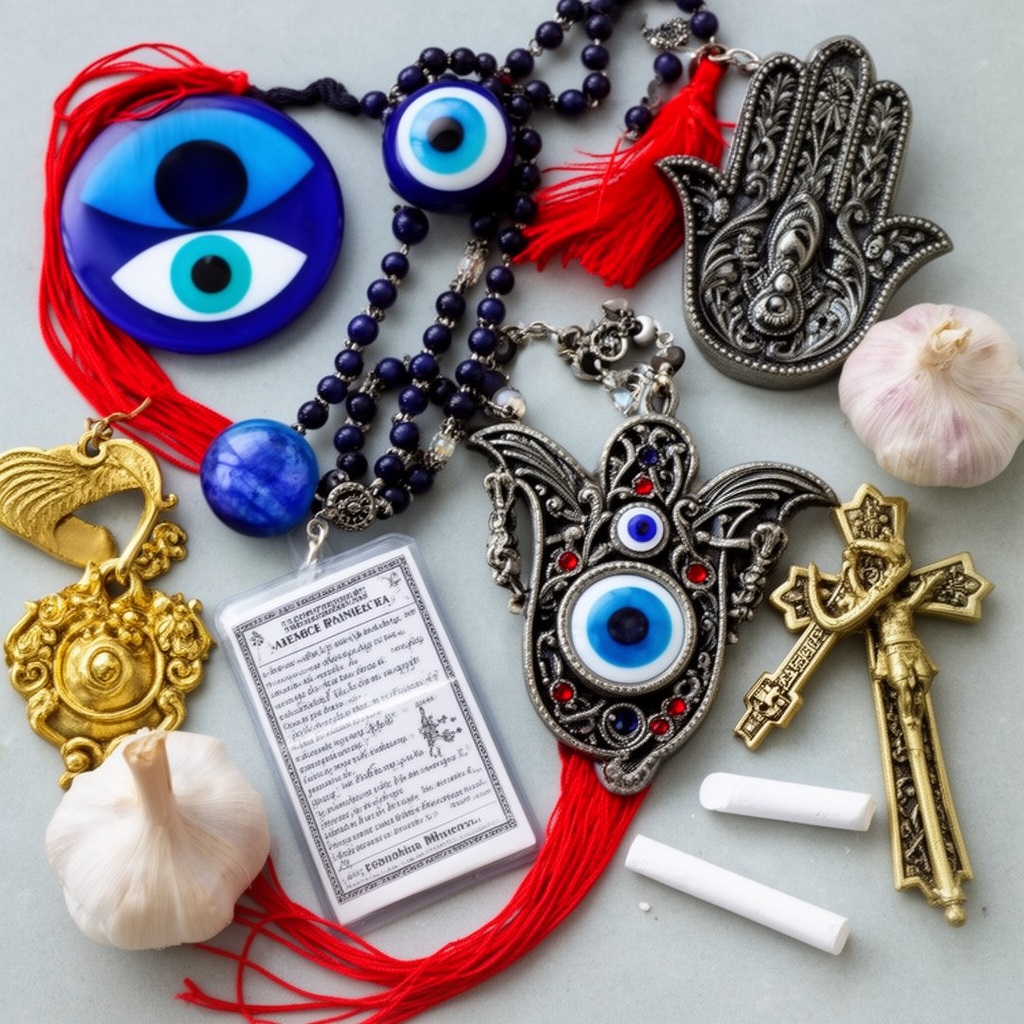
Across the world, people have created physical objects believed to deflect envy and misfortune.
In the Middle East and North Africa, the Hamsa: the Hand of Fatima or Miriam, often features an eye in its center. In Turkey, Greece, and Cyprus, the Nazar, a blue glass bead, is believed to absorb envy before it reaches its target. Italians carry the cornicello, a twisted horn-shaped charm, while in Jewish tradition the evil eye is called ayin hara, and red string bracelets are worn for protection.
Different shapes, same intention.
Envy is believed to cause sickness, infertility, loss, or misfortune, themes that echo in ancient religious texts, including the Bible.
Rituals, Barriers, and Protective Practices
Not all protections are worn. Many are enacted.
Among the Igbo and Yoruba of West Africa, protective measures include specific herbs, waist beads (jigida), white chalk (nzu), camwood, and even protective naming practices for children. Some communities historically used body markings believed to shield against spiritual harm.
In India, wedding rituals often involve fire ceremonies using chili, mustard seeds, and protective markings like black dots or bindis to divert excessive attention from the couple.
Across Southeast Asia, red strings blessed by monks or priests are tied around wrists for spiritual protection.
Discretion itself becomes a barrier. In Nigeria and parts of the Caribbean, people avoid announcing pregnancies, travel plans, or major life changes too early.
Linguistic Shields: Protection Through Words
Protection is not only physical, it is also verbal.
- In Islam, Mashallah (“What God has willed”) acknowledges divine authorship of blessings.
- In Judaism, Bli ayin hara expresses hope that envy will not interfere.
- Christians declare several scriptures including Psalm 91.
- Among the Igbo: Tufia! or Tufiakwa!
- Among the Yoruba: Olorun maje, ko ni sele
As Christianity spread, many ancient practices were replaced rather than erased. Amulets gave way to rosaries and scapulars. Incantations became novenas and blessings. Herbal smoke became incense in churches and homes.
Holy water, olive oil, the sign of the cross, Scripture, and the blood of Jesus became widely accepted spiritual defenses.
Who Is Considered Most Vulnerable?
Across cultures, the same groups are seen as most at risk:
- Babies
- Pregnant women
- Brides
- The visibly successful
Protective symbols frequently involve red, blue, or white colors; motifs of eyes, hands, or horns; and spoken declarations.
The shared intuition is striking: attention, envy, and vulnerability can be a dangerous combination.
The Eye in Hebrew and Igbo Thought
Reading the Bible chronologically led me on a journey through the Holy Lands. In the process, I uncovered uncanny parallels between traditional Igbo culture and biblical Hebrew traditions, too numerous to ignore.
Both cultures attach deep symbolic meaning to the eye.
To the Hebrews, the eye represents intention and perception.
To the Igbo, the eye: “anya“is both physical and moral, a metaphor for desire, character, and spiritual disposition.
Igbo Moral Language of the Eye
Vices
- Anya oku — envy
- Anya ojo — malicious intent
- Anya ufu — bitterness
- Anya iwe — anger
- Anya ukwu — greed
Virtues
- Anya oma — kindness
- Anya ebere — mercy
- Anya ifunanya — love
The Igbo expression of love: A furu m gi n’anya (“I see you in my eyes”), may be one of the most profound declarations of love in any language.
Even greetings center the eye:
“Anya gi?”
“Anya na ibe ya.”
Ancient wisdom preserved in everyday speech.
Biblical Reflections: Joseph and Job
Two stories shaped my thinking.
Joseph: Protected While Exposed
Joseph was favored, gifted, vocal about his dreams, and highly visible within his family, all conditions that attract envy. His brothers hated him and could not speak peaceably with him. Yet he remained divinely protected and fruitful despite hostility.
He became a model for being protected while exposed.
Job: Tested Without Envy
Job’s story provides a necessary contrast. Not all suffering comes from envy or human malice. Sometimes righteousness itself attracts spiritual contention. His trial was supernatural, not social.
Not all loss is caused by people watching you.
Faith Over Fear
Belief in the evil eye exists across cultures because humans intuitively understand the destructive power of envy, words, and attention.
This is not a fear-mongering narrative. It is a call to discernment, spiritual sensitivity, wisdom in speech, and trust in God’s protection.
As travelers, especially those moving across spiritual landscapes, we must exercise caution about the objects we purchase and wear without understanding their cultural and spiritual implications.
The Bible does not endorse talismans, but it does recognize envy as spiritually destructive.
Faith, not fear, is the prescription.