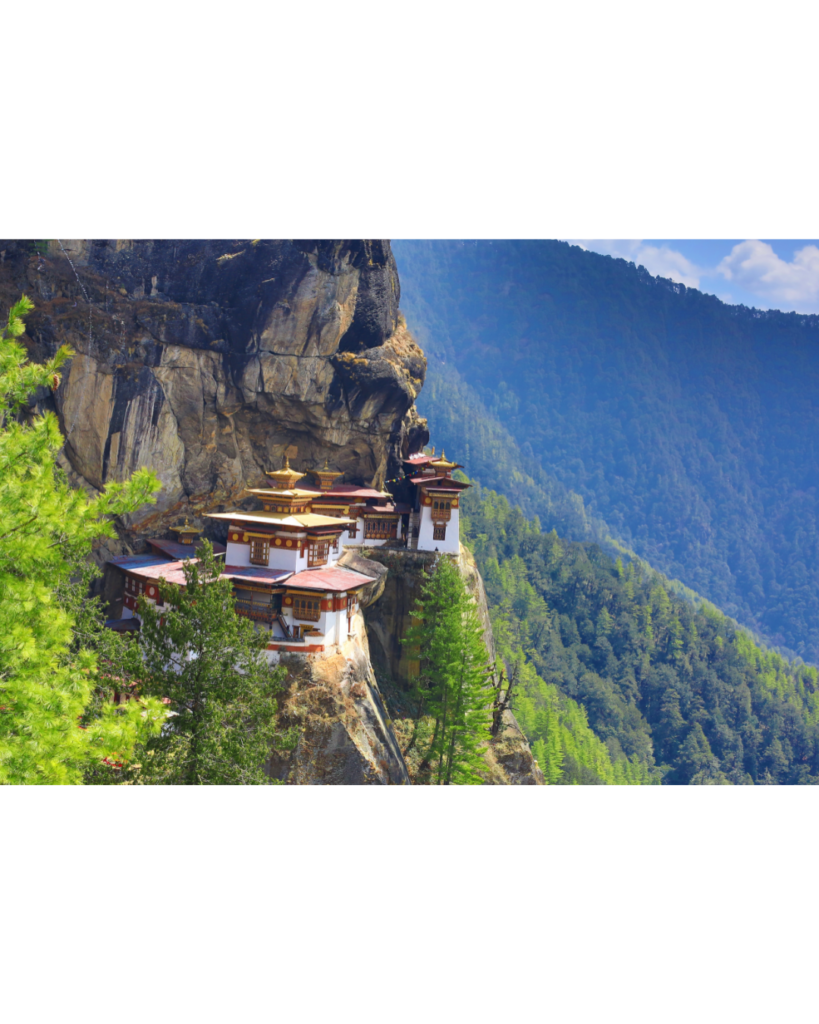

I went to Bhutan!
Before arriving in Bhutan, I didn’t know a whole lot about the country. In recent years, travel influencers have showcased more of it online, usually stunning mountain scenery and dramatic photographs from the Tiger’s Nest Monastery hike. I had also heard about how difficult it was to visit and that every night spent in the country came with a government fee.
The first and only Bhutanese person I had ever met abroad was a lady I did my driving test with in Doha. We got talking and she told me how beautiful Bhutan was and insisted it was absolutely worth visiting.
Since I am on a journey to visit every country in the world, I knew Bhutan was inevitable.
Originally, I wanted to hike to Everest Base Camp for my 40th birthday, but I couldn’t recruit willing participants. Then the regional conflict started and suddenly I couldn’t travel anywhere at all from Doha. When things settled down, I decided to go to Nepal anyway and add Bhutan to the itinerary. While booking flights, I noticed there were more frequent connections through Kolkata, India. Kolkata had intrigued me for a long time, so I added that too.
And just like that, another adventure was born.
First Impressions
Bhutan is unlike anywhere I have visited before.
The country is famous for being carbon negative and for measuring progress through Gross National Happiness (GNH) rather than focusing purely on GDP. The philosophy prioritises wellbeing, culture, environmental protection and good governance.
As soon as I arrived, I could see why Bhutan is often described as peaceful.
The population is only about 800,000 people. The pace of life feels slower and more intentional. Traditional architecture is preserved. Forests cover more than 70% of the country. Everywhere you look there are mountains, rivers, forests and valleys.
Everything is a view.
Thimphu, Punakha and Paro
I spent my time exploring Thimphu, Punakha and Paro.
One of my first surprises was arriving during jacaranda season. The trees were in full bloom and their purple flowers seemed to blanket the landscape. Since purple is one of my favourite colours, I was absolutely delighted.
Bhutan in May is beautiful.
The roads wind through mountains and valleys, constantly changing altitude. One moment you’re climbing through mist-covered mountain passes, the next you’re descending into lush valleys filled with rice fields and rivers.
Driving through Bhutan is an attraction in itself.
The People and Hospitality
The Bhutanese take hospitality very seriously.
I was constantly well fed throughout my stay. The food was delicious, the portions generous, and there was always something interesting to try. If you’re adventurous with food, Bhutan is a wonderful destination.
The national dish is Ema Datshi, a spicy chilli and cheese stew. There is also Kewa Datshi, made with potatoes and cheese, and Shakam, dried beef cooked with chillies. Red rice is a staple.
And if spicy food delicious isn’t your thing, Indian food is widely available as a backup. There are so many Indian tourists.
I honestly didn’t notice whether there were fast food chains around because I was too busy enjoying the local cuisine.
Learning About Bhutanese Culture
One thing I loved was how seriously Bhutan protects its culture.
Government workers wear traditional dress during office hours. Men wear the Gho and women wear the Kira. At formal occasions, additional ceremonial garments are added.
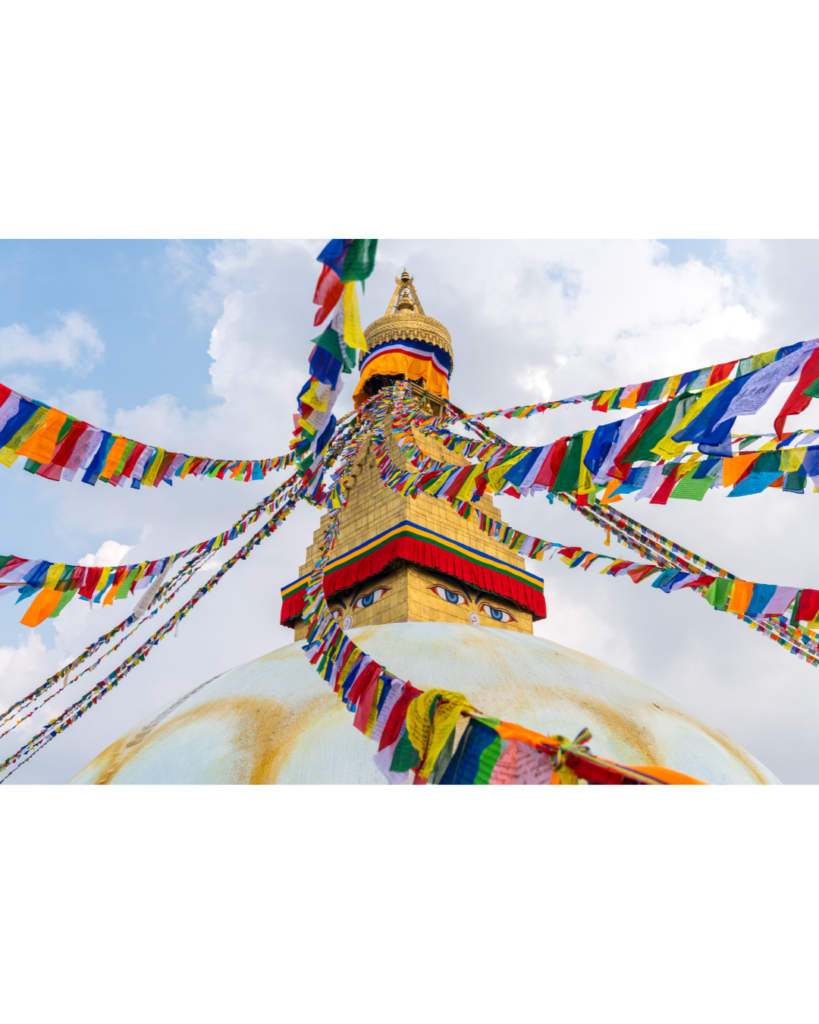
Prayer flags flutter across mountainsides.
Prayer wheels line pathways and monasteries.
Ancient customs remain part of everyday life.
It reminded me that culture can be preserved if people choose to value it.
The Divine Madman and Giant Phalluses
No discussion about Bhutan would be complete without mentioning Drukpa Kunley, known as the Divine Madman.
He is one of the most famous figures in Bhutanese folklore and is associated with fertility, blessings and protection.
His influence is visible throughout the country in a way that surprises many visitors. Phallic symbols are painted on houses, carved into wood and carried during certain fertility rituals.
The last time I saw such strong phallic symbolism was in Togo and Benin through the deity Tolegba/Legba. Seeing similar themes appear thousands of kilometres away in the Himalayas was fascinating.
Travel constantly reminds me that different cultures often arrive at surprisingly similar ideas.
Buddhism, But Not As I Knew It
I thought I knew enough about Buddhism.
I was wrong.
Bhutan introduced me to Tibetan-influenced Vajrayana Buddhism, which is quite different from the forms of Buddhism I had previously encountered.
I learned about Padmasambhava, also known as Guru Rinpoche, the Lotus-Born and the Second Buddha.
According to tradition, he miraculously emerged seated upon a lotus flower and later helped establish Buddhism throughout Tibet and the Himalayas.
Suddenly, many things started making sense.
The prayer wheels.
The monasteries.
The symbolism.
The deep connection between religion and daily life.
Even the famous Tiger’s Nest Monastery is linked to Guru Rinpoche, who is said to have arrived there on the back of a flying tigress.
The National Animal: The Takin
Another fascinating discovery was the takin, Bhutan’s national animal.
According to legend, Drukpa Kunley once ate a cow and a goat, placed their bones together, snapped his fingers and brought the creature back to life.
That mythical creature became the takin.
The animal has become an important part of Bhutanese identity and spiritual folklore.
Tiger’s Nest Monastery
No visit to Bhutan is complete without visiting Tiger’s Nest.
The hike was honestly one of the hardest things I have done recently.
Not because of the distance.
The altitude was my enemy.
I struggled with altitude in Peru, especially in Arequipa, Puno and Cusco, and Bhutan reminded me that my body still isn’t a fan of thin mountain air.
There were moments when I questioned my fitness, my decisions and my sanity.
But I kept going.
The monastery is worth every step.
The views are spectacular, the history fascinating and the sense of accomplishment enormous.
I would strongly recommend hiring at least one trekking pole. This was my first serious hike using one and I completely understand why experienced hikers use them.
Recovery Is Essential
After Tiger’s Nest, recovery became a priority.
I tried a traditional Bhutanese hot stone bath, which turned out to be one of the biggest surprises of my trip.
Mineral-rich stones collected from glacier-fed rivers are heated and then dropped into a wooden bath. The stones heat the water while releasing minerals into it.
I soaked for an hour.
Then followed it with a recovery massage.
I felt like a new person afterwards.
My Tour Experience
I arranged my trip through Bhutan Travel Centre and had a wonderful experience.
The package included:
- Visa
- Local SIM card
- Accommodation
- Meals
- Ground transportation
- Attraction entrance fees
Imagine arriving in a country where the only things you need to spend money on are fridge magnets, alcohol and post-hike massages.
That was Bhutan.
The owner, Sharma, and his team took excellent care of me and made the trip incredibly smooth.
Final Thoughts
I spent only three nights in Bhutan, but my days were packed.
I visited monasteries, forts, museums, suspension bridges, rice fields and UNESCO-listed sites.
I learned about religion, culture, history and food.
I met wonderful people.
I stood among purple jacarandas.
I crossed suspension bridges.
I hiked Tiger’s Nest.
I sang karaoke on my final night.
And then I left on the first flight the next morning.
Bhutan exceeded every expectation I had.
It is beautiful, peaceful, culturally rich and unlike anywhere else I have visited.
A land blessed by the gods and protected by the Thunder Dragon.
If you are visiting Nepal or Kolkata, I strongly encourage you to add Bhutan to your itinerary.
I recommend Bhutan 101%.
And yes, I fully intend to return.